
How to choose a hair oil that suits your routine
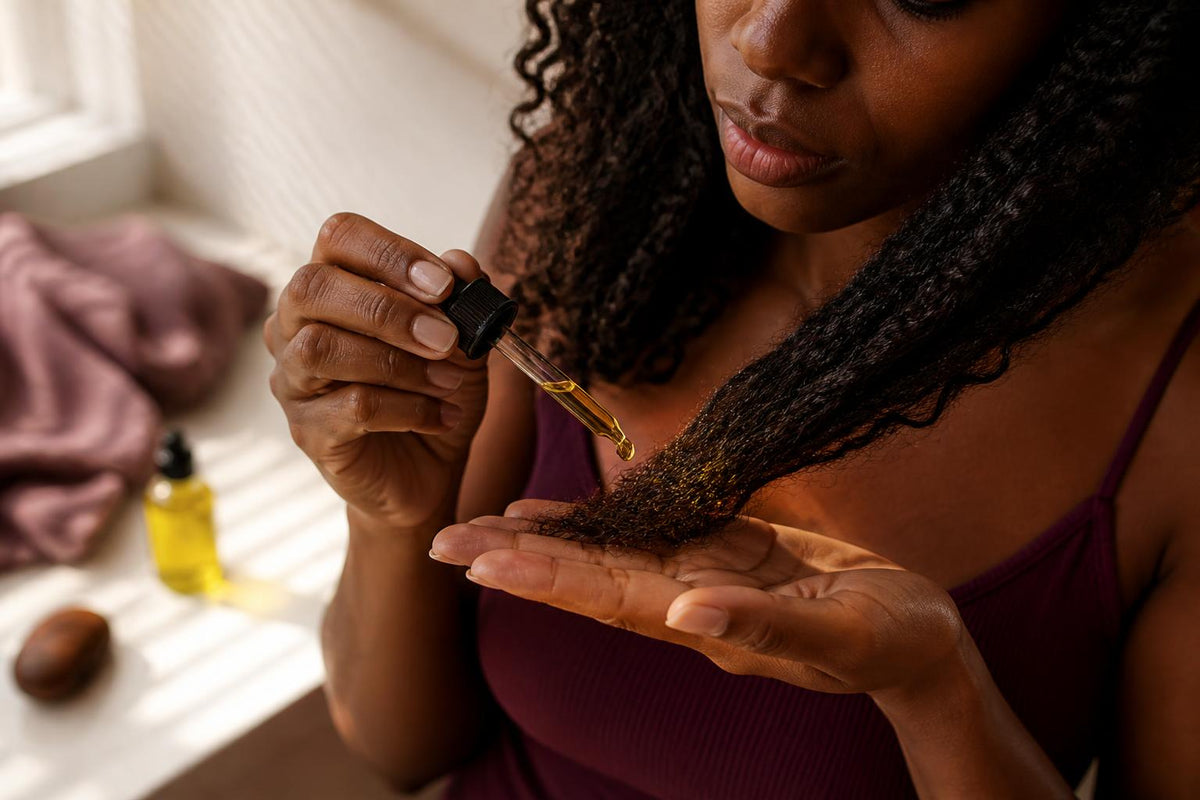
Choosing a hair oil that suits your routine comes down to three things: what you want it to do, how your hair behaves day to day, and where the oil fits among the products you already use. The right one can help reduce dryness, add slip, soften the feel of the hair and give a smoother finish. The wrong one is usually not “bad”, it is simply too heavy, too light, or being used at the wrong point in the routine.
For most people shopping for a hair oil in the UK, the most useful approach is practical rather than trend-led. Start with your hair type, your wash pattern and your styling habits. If you usually air dry, wear your hair up, use gels or creams, or protect your hair overnight, the best oil for you will be the one that works with those habits instead of fighting them.
What hair oil is actually for
Hair oil is best thought of as a support product, not a fix-all. In an everyday routine, it can help with softness, shine, reducing the rough feel of dry ends, and improving manageability. It can also help limit friction, especially on the mid-lengths and ends, where hair tends to be older, drier and more prone to tangling.
What it should not be expected to do is repair split ends back together, replace a conditioner, or solve a scalp issue on its own. If your hair is repeatedly dry after washing, the answer is often in the whole routine, shampoo strength, whether you need a richer conditioner, whether you detangle too roughly, how you dry your hair, and whether you need a mask from time to time. We cover that in more detail in our guide to choosing a hair mask that actually suits your hair.
A conditioning oil is particularly useful when your hair loses moisture quickly, catches on clothing, looks dull at the ends, or needs a small amount of polish after styling. For textured hair, it can also help hold softness in the hair after a leave-in product. For straighter or finer hair, it is often most useful as a very light finishing step.
In the UK, everyday habits matter more than marketing claims. Central heating, hard water in many areas, damp weather, commuting, and regular heat styling can all change how your hair feels. A hair oil can help manage those effects, but it works best when used with realistic expectations. Think smoother, softer, more manageable hair, not transformation.
How to pick the right hair oil for your hair type
The first thing to judge is weight. Not all oils feel the same on the hair, and not every formula marketed as an oil is made only of plant oils. Some contain lighter emollients or silicones to improve slip and reduce heaviness. Reading the INCI list helps, but so does paying attention to how your own hair responds.
Fine hair usually suits lighter application and lighter texture. If your roots flatten easily or your lengths look greasy quickly, choose an oil mainly for the ends and use very little. One drop warmed between the palms can be enough on short or shoulder-length fine hair. Fine hair often benefits more from oil as a finishing step than as a heavy pre-wash treatment.
Medium-density straight or wavy hair often has the most flexibility. You may like oil pre-wash on wash day, then a tiny amount post-wash on the ends. If your waves frizz in humid weather, oil can help seal in softness after your leave-in or cream, but too much may stretch the wave pattern and reduce volume.
Thick straight hair can usually handle a richer feel, especially on the lower half of the hair. If the ends feel coarse or brush roughly, a conditioning oil used before detangling or after drying can make the hair easier to manage. If you heat style, oil is not a substitute for a dedicated heat protectant unless the product directions explicitly say it is one.
Curly hair often benefits from oil used with layering in mind. Many people do well with leave-in first, then cream or gel, then a small amount of oil either to seal moisture in damp hair or to soften a cast once the hair is fully dry. If your curls are fine, use less. If they are dense or dry easily, you may prefer a slightly richer application focused on the ends and outer layers.
Coily hair often tolerates and benefits from more emollient support, especially if you wash less frequently or wear protective styles. Oil can help reduce friction, add softness and support moisture retention when used over a leave-in. It can also be useful when taking down twists, braids or buns, because it gives slip and can reduce snagging. That said, even coily hair does not always need a heavy oil every day. Build around how your hair actually feels.
If you are trying to narrow it down, think in pairs:
- Fine, low-density hair, lighter texture, smaller amount, mostly ends
- Thick, dense hair, richer texture, more flexibility in amount and placement
- Straight hair, often best as a smoothing or finishing product
- Wavy hair, useful for frizz control and softening, but easy to overdo
- Curly and coily hair, often best when layered with leave-in and stylers
Tools matter too. A good comb or brush can reduce how much oil you feel you need, because less friction means less roughness. If your hair tangles easily, have a look at our brushes and combs for detangling and everyday styling.
When to use hair oil in your routine
Hair oil can do different jobs depending on when you use it. The same product may work well pre-wash for one person and only as a finishing oil for another.
Pre-wash use is helpful if your lengths feel dry or if shampoo leaves the ends rough. Apply the oil to dry hair before washing, concentrating on mid-lengths and ends. Leave it on briefly while you get ready to wash, or longer if that suits your routine. This can reduce the stripped feeling some people get after cleansing. If you co-wash, you may still prefer a little oil on the ends beforehand if your hair tangles during wash day.
Post-wash use on damp hair is about softness and sealing. After cleansing and conditioning, gently remove excess water, then apply a small amount of oil to the lengths and ends. This works best when the hair is damp rather than dripping. If you are using a leave-in, apply that first unless the directions say otherwise. Oil on soaking wet hair can sit on the surface and feel ineffective, while oil on very dry hair can be harder to spread evenly.
Leave-in layering is common for curly and coily routines. A simple order is leave-in, then cream if you use one, then gel if you want hold, then a tiny amount of oil once the hair is either nearly dry or fully dry, depending on the finish you want. Some people prefer oil before gel, but this can reduce hold in some routines. The only reliable test is to try a small amount and see how your hair behaves.
Finishing use is the easiest place to start if you are unsure. When your hair is dry, smooth one or two drops over the ends or lightly over the surface to reduce flyaways and add shine. This is often the best approach for straight, fine or blow-dried hair because it gives control without weighing the style down too early.
Drying method affects results. If you rough-dry with a standard towel, you may create more frizz and then feel you need more oil to correct it. A gentler option is a microfibre towel and overnight care essentials, which can reduce friction before you reach for more product.
How much hair oil should you use?
Most greasy results come from using too much, applying too close to the roots, or adding oil repeatedly without adjusting the rest of the routine.
For short fine hair, start with one drop. Rub it between your palms and touch only the ends or the outer surface where needed. For shoulder-length medium hair, one to two drops is often enough. For long, thick, curly or coily hair, you may need more, but it is still better to build up gradually than to start heavy.
Placement matters as much as amount. In most routines, the safest area is from the ears down, or even lower if your hair is fine. Applying oil at the roots can make the hair look unwashed quickly unless you are specifically doing a pre-wash scalp and hair treatment and plan to cleanse afterwards.
Frequency should reflect how often your hair actually needs support. Some people use oil only on wash day. Others use a tiny amount between washes on dry ends. If you find yourself reapplying every day and the hair still feels dry, step back and check the routine. You may need a better conditioner, a periodic mask, less heat, gentler drying, or less friction from accessories and bedding.
Length and density change the picture:
- Short or fine hair, less product, less often
- Long or thick hair, more flexibility, but still focus on the driest areas
- Curly or coily hair, often more frequent use on ends and sections exposed to friction
- Fringe or face-framing layers, usually need less than the back lengths
If you wear buns, ponytails or clips often, oil can help the lengths stay soft, but too much under accessories can make the hair separate or look limp. It helps to use soft accessories and rotate placement. Our everyday clips, pins, bands and scrunchies are useful if you want to reduce tugging and friction as part of the routine.
What to check on the label before you buy
Start with the INCI list. This tells you what is actually in the bottle, in descending order by weight until the lower-percentage portion of the formula. If a product is sold as an oil but the first ingredients are lightweight synthetics or silicones, that does not automatically make it unsuitable. It simply tells you it may feel lighter, spread more easily, and behave more like a smoothing serum. For some hair types, that is exactly the right choice.
Look at directions next. Good directions tell you where the brand expects the product to sit in the routine, on damp hair, dry hair, pre-wash, or overnight on lengths. If the directions are vague, be cautious with quantity at first.
Check whether fragrance is likely to matter to you. A strongly scented oil can be pleasant at first and tiring later, especially if you use it near the face or overnight. If you are sensitive to fragrance, read the ingredient list carefully and keep the rest of your routine in mind.
Be realistic about product claims. “Nourishing”, “smoothing” and “shine-enhancing” are useful descriptions. “Repairs split ends” is usually shorthand for temporarily making them look smoother. “For all hair types” should be treated as a starting point, not a guarantee. In practice, almost no hair product suits everyone in the same way.
In the UK, cosmetic products must comply with the UK Cosmetics Regulation. After Brexit, this differs from the EU system in administration, even where many underlying standards remain closely aligned. In practical terms for shoppers, you may see a UK Responsible Person for products placed on the Great Britain market, and labelling may differ slightly from EU-only stock. That does not tell you whether the oil suits your hair, but it is one reason labels are worth reading carefully rather than assuming every version sold across markets is identical.
Finally, check bottle size and format in relation to how you will use it. If you only want an occasional finisher for fine hair, a little goes a long way. If you have long, dense, textured hair and use oil on wash day and between washes, ease of dispensing matters more.
How to build a simple routine with the products you already use
The easiest way to make hair oil work is not to redesign your whole routine around it. Fit it into what you already do.
If you wash with shampoo and conditioner once or twice a week, try this:
- If your ends are very dry, apply a little oil to the lengths before washing.
- Shampoo the scalp and rinse through the lengths.
- Condition well, then rinse.
- Blot with a microfibre towel or soft drying cloth.
- Apply leave-in if you use one.
- Add one or two drops of oil to the ends on damp hair, or wait until dry and use it as a finisher.
If you wear your hair wavy or curly with gel:
- Cleanse and condition as usual.
- Apply leave-in to damp hair.
- Add cream if your hair likes it.
- Apply gel for hold.
- Dry fully.
- If the cast feels too hard or the ends feel dry, smooth a tiny amount of oil over the hands and gently scrunch it in.
If you co-wash or wash frequently because of exercise:
- Keep oil use light.
- Focus on the ends rather than the whole head.
- Use oil mainly post-wash or on non-wash days where the hair feels rough.
- Avoid layering heavy cream, heavy oil and then more oil again, unless your hair is very dense and thrives on it.
If you mostly air dry and wear your hair up:
- Use a small amount of oil on damp lengths.
- Let the hair dry at least partly before putting it into a style.
- Choose accessories that do not catch the hair.
- Reapply only to the driest ends, not the whole ponytail or bun.
If your overnight routine is adding to dryness, look at friction first. A sleep cap or buff can do more for preserving softness than extra oil alone, especially for curls, coils and blow-dried styles. Drying and overnight care are often where routine improvements pay off most clearly.
If you are travelling or trying to simplify, keep the routine honest. You do not need a separate oil for every purpose. One conditioning oil can cover pre-wash on the ends, light post-wash use, and occasional finishing, as long as the texture suits your hair. If you are building a compact kit, our guide to packing a travel haircare set that actually works can help you avoid overpacking.
At ManeDivas, operated by Fleeta Limited, we prefer a routine that makes sense in real life. The best hair oil in the UK for your routine is the one that fits your hair type, your wash habits and your styling products, and that you can use consistently without second-guessing it. Start small, place it where your hair is driest, and let the results guide you.
Is hair oil good for all hair types?
It can be useful across many hair types, but the right formula, amount and timing vary. Fine hair often needs less and lighter application, while thicker or curlier hair may prefer richer use.
Should I use hair oil on wet or dry hair?
Both can work. Damp hair often suits sealing and softness, while dry hair is common for finishing, shine and taming frizz. The product directions should guide the best method.
Can hair oil replace conditioner?
No. Conditioner and hair oil do different jobs. Conditioner is part of cleansing and detangling after washing, while oil is usually an added step for softness, sealing or finish.
Why does hair oil make my hair look greasy?
Usually it is too much product, applied too close to the roots, or a formula that feels too heavy for your hair. Start with a very small amount and focus on mid-lengths and ends.
Do I need a different hair oil for curly or coily hair?
Not always, but many curly and coily routines benefit from richer sealing or finishing steps. The best choice depends on density, porosity, styling habits and the rest of your routine.