
How to care for fine hair without weighing it down
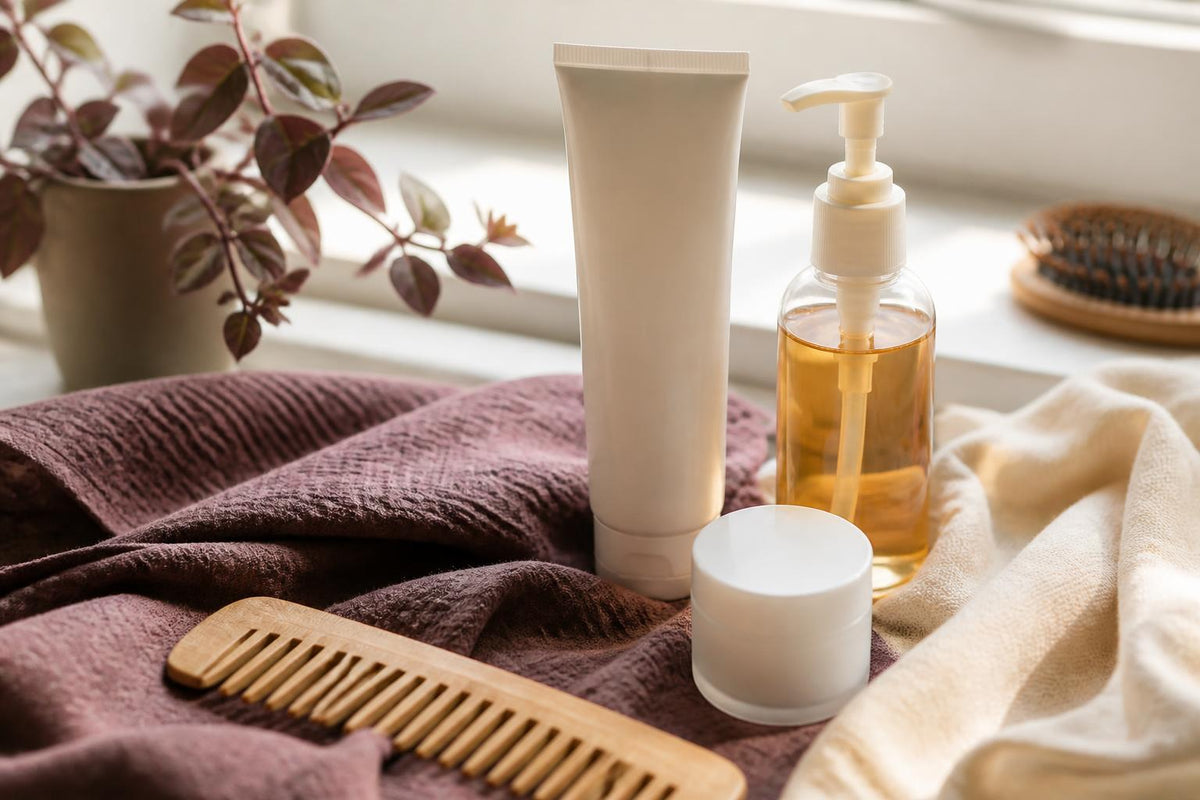
Fine hair usually responds best to less weight, less residue and more control over where products go. If your strands are slim in diameter, even a good conditioner or styling cream can tip from helpful to heavy very quickly. The aim is not to strip the hair or avoid moisture altogether. It is to cleanse thoroughly enough, condition selectively, and style with products and tools that support movement instead of flattening it.
Good haircare for fine hair is often about placement and amount rather than buying an entirely different routine. A lightweight shampoo used as often as your scalp needs it, conditioner kept mainly to mid lengths and ends, and styling products layered sparingly can make a visible difference. So can small practical changes, such as switching to gentler brushes, using a microfibre drying towel, and choosing accessories that do not pull or leave dents.
What fine hair actually needs
Fine hair refers to the thickness of each individual strand, not how much hair you have overall. You can have fine hair with high density, meaning lots of strands, or fine hair with low density, meaning fewer strands and more visible scalp. Those are different issues, and they need slightly different handling.
If your strands are fine, they tend to pick up oil and product buildup quickly because there is simply less fibre there to absorb or support heavier formulas. That is why hair that felt soft when wet can dry looking limp, separated or greasy at the roots. Low density hair can also look flatter more easily, but density alone does not tell you whether products will feel too rich. Strand size matters.
In practice, fine hair usually does best with lightweight cleansing, conditioning and styling. That means a shampoo that removes scalp oil and product residue without leaving the hair rough, a conditioner that softens the lengths without coating them, and stylers used in small amounts with a clear purpose. If a product does three things at once but leaves your hair flat by lunchtime, it is not the right fit for your routine.
This is also why some people with fine hair prefer shampoo over a co-wash. A co-wash can work for certain textures and routines, but fine strands often need a cleaner reset, especially if you use styling products regularly or your scalp becomes oily quickly. We find that many people get better results from a balanced wash routine than from trying to stretch out cleansing at all costs.
When you are comparing products, the INCI list can help you spot richer oils, butters and conditioning agents, but texture and dosage matter too. A formula can contain nourishing ingredients and still work well for fine hair if it is used lightly and rinsed thoroughly. Haircare for fine hair is rarely about banning ingredients outright. It is about how the formula behaves on your own scalp and lengths.
How often should you wash fine hair?
There is no single wash schedule that suits everyone with fine hair. Some people are comfortable washing daily. Others do well every other day or two to three times a week. The right frequency depends on how quickly your scalp becomes oily, how often you exercise, how much styling product you use, and how your hair feels between washes.
If your roots look oily or your scalp feels uncomfortable after a day, washing more often can be the better option. Fine hair is often more obviously affected by sebum because oil travels down slimmer strands quickly. Leaving it longer does not always train the scalp to produce less oil, and for many adults it simply means flatter roots and more tangling through the lengths.
Exercise matters too. If you sweat heavily several times a week, your ideal routine may include more frequent washing or at least a water rinse and scalp refresh between full wash days. Product use also changes the picture. If you rely on mousse, gel, cream or oil for hold and definition, buildup can arrive faster than you expect on fine hair.
Comfort counts. If your scalp feels itchy, sticky or congested, that is useful information. So is the opposite. If your hair still feels fresh and moves well on day three, there is no need to wash sooner just because someone else does.
A practical approach is to watch for these signs:
- roots separating and looking shiny sooner than usual
- style collapsing even after brushing or restyling
- scalp feeling uncomfortable
- lengths starting to feel coated rather than soft
- products no longer performing as they did on wash day
If that sounds familiar, wash frequency may need adjusting. Often the answer is not a stronger conditioner or more styling product, but simply cleansing at the point your scalp and roots actually need it.
How to condition fine hair without losing movement
Conditioner is often where fine hair starts to lose body, but skipping it altogether can leave the lengths dry, flyaway and prone to breakage. The key is to apply it where it is needed most and in an amount your hair can actually use.
For most fine hair, that means keeping conditioner off the scalp and roots and focusing on mid lengths and ends. If your hair is very short, use the smallest amount and concentrate on the older, more exposed sections rather than the newest growth near the scalp. If your hair is shoulder length or longer, smooth it through from around ear level down, then use your fingers or a wide tooth comb to distribute it lightly.
How much is enough depends on your length and density, but fine hair usually needs less than people think. Start small. You can always add a little more if the ends still feel rough. If the hair feels slippery but not coated, you are probably close to the right amount. Rinse thoroughly. Incomplete rinsing is one of the quickest ways to lose movement.
A leave-in can help, particularly if your ends tangle, your hair is colour treated, or you heat style regularly. The trick is to use a very small amount, or to dilute product in an empty refillable spray bottle so you can mist it more evenly. Keep it to the ends and any areas that snag easily. A leave-in should make detangling easier and reduce friction. It should not leave the hair feeling damp, waxy or sticky once dry.
If your roots flatten easily, avoid layering multiple conditioning products on the same day unless each one is used very sparingly. Shampoo, rinse out conditioner, leave-in, cream and oil can be too much for fine strands unless your lengths are especially dry. For many people, one rinse out conditioner plus one lightweight styler is enough.
You can browse lightweight wash and care staples for everyday routines if you want to simplify what goes into your wash day.
Which styling choices help fine hair look fuller?
Fuller looking fine hair usually comes from technique before product quantity. It is easy to assume more mousse, cream or spray will create more body, but overload tends to do the opposite. Fine strands respond better to a light hand and a clear order of application.
Start with the product type. Lightweight foams, mists and gels often suit fine hair better than dense creams or heavy oils, especially near the roots. Creams can still work, but they are usually best reserved for the ends or for very specific control, such as smoothing frizz on the surface. If you use more than one styler, apply the lightest first and the richest last, using the smallest amount that gives a visible benefit.
Layering order matters because each product changes how the next one sits on the hair. A simple sequence might be leave-in on the ends, then a small amount of gel or foam through the lengths for hold. If you are using oil, treat it as a finishing product and use only a drop or two on dry ends if needed. Applying oil before your main styler can make fine hair collapse.
Drying approach makes a difference as well. If you air dry, try lifting the roots occasionally while the hair sets rather than letting it dry plastered to the scalp. If you diffuse or blow dry, focus on root lift first. Drying the roots in the direction you want them to sit can add far more body than another layer of product. Fine hair often benefits from being dried until fully dry rather than left slightly damp, because that lingering moisture can pull the style flat.
Definition also helps hair look fuller. Hair that is lightly clumped, shaped or directed tends to appear more intentional and less wispy. That does not mean rigid hold. It means helping the strands sit together in a way that gives the style structure.
To avoid overload, make one change at a time. If your hair feels limp, ask whether the issue is too much product, too much richness, or simply too much touching while it dries. Often the fix is to reduce quantity by half rather than replacing everything at once.
Tools and accessories that are gentler on fine hair
Fine hair can be damaged as much by friction and tension as by product mistakes. The right tools help reduce snagging, flattening and breakage, especially if your hair tangles easily or loses shape overnight.
A wide tooth comb is often the safest place to start on wet or conditioned hair. It helps separate tangles without forcing the hair. For dry detangling or smoothing, a brush with flexible bristles can be gentler than a rigid brush that drags through knots. The best choice depends on your texture and styling habits, but the principle is the same, reduce tension and avoid repeated harsh passes through the same section.
If you are reviewing your kit, our brushes and combs for detangling and everyday styling are a practical place to compare options.
Accessories matter too. Tight elastics can leave dents and put stress on fine strands, particularly around the hairline and crown. Softer hair bands and scrunchies usually spread pressure more evenly. Clips and pins should hold the hair securely without needing to be forced into place. If an accessory catches when you remove it, it is not as gentle as it needs to be.
Drying towels are another easy upgrade. A microfibre towel or drying cloth helps remove excess water with less roughness than vigorous rubbing with a standard bath towel. The method matters as much as the fabric. Press or blot the hair rather than twisting it tightly. Fine wet hair is more vulnerable to stretching and snapping.
Overnight care can help preserve movement and reduce flattening. A sleep cap or buff can cut down friction, especially if your lengths tangle at the nape or your style frizzes overnight. If your hair is very fine and loses root lift while you sleep, try gathering it loosely rather than tying it tightly on top of the head. Our drying and overnight care options for lower friction routines can help with that part of the routine.
Brush hygiene matters as well. Oil, lint and product transfer back onto clean fine hair quickly, so cleaning tools regularly is part of good maintenance. We cover that in our guide to cleaning hair brushes without damaging them.
A simple routine for wash day and the days after
A good routine for fine hair does not need to be complicated. It needs to be repeatable, adjustable and light enough that your hair still feels like hair when you are done.
On wash day, start by detangling gently before you get into the shower if your hair knots easily. Then shampoo the scalp properly. Use your fingertips, not your nails, and work in sections if your hair is dense. If you use a lot of styling product, a second cleanse may be more effective than using too much shampoo at once. A scalp massager can help distribute shampoo and lift residue, but use light pressure rather than scrubbing aggressively.
Rinse thoroughly, then apply conditioner from mid lengths to ends. Leave it on briefly, comb through if needed, and rinse well. If your ends are particularly dry, use a small amount of leave-in on very wet hair and keep it away from the roots.
Next, remove excess water with a microfibre towel or drying cloth by pressing rather than rubbing. Apply your styler in stages. Start with the smallest amount that makes sense for your texture and the finish you want. For many fine hair routines, that means one main styler for hold or definition, not three products competing with each other.
Dry with intention. If you want more lift, do not let the roots dry flat to the scalp. If you diffuse, begin at the roots and avoid overhandling the lengths. If you blow dry, use moderate heat and keep the airflow moving. Once dry, resist the urge to keep adding product unless there is a specific area that needs it.
On the days after washing, refresh according to what has actually changed. If the lengths still feel fine but the roots are flat, focus only there. A light mist of water from a refillable spray bottle can help reset small sections without soaking the whole head. If ends look dry, smooth the tiniest amount of leave-in or conditioning oil over just those areas. If the hair feels limp overall, adding more product is rarely the answer. You may need either a lighter refresh or a sooner wash.
As the week goes on, adjust based on feel. Fine hair can switch quickly from soft and airy to coated and heavy. That does not mean your routine has failed. It usually means your hair has reached the point where it needs cleansing again, or where one product should be reduced next time.
At ManeDivas, operated by Fleeta Limited, we keep our advice grounded in that kind of everyday reality. Fine hair does not need punishing, and it does not need to be smothered. With thoughtful cleansing, selective conditioning, lighter styling and gentler tools, it can stay soft, mobile and easier to manage from wash day to the next one.
Can fine hair use oils?
Yes, but usually in very small amounts and mainly on the ends. Too much can make fine hair separate, look greasy or lose movement quickly.
Is co-wash a good idea for fine hair?
It can suit some people, but many with fine hair find it too heavy if used often. It depends on build-up, scalp oil and how easily your roots flatten.
Why does fine hair look greasy so quickly?
Fine strands are easily coated by scalp oil and styling product, so roots can look oily sooner. Heavy conditioners and touching hair often can add to it.
Should fine hair avoid leave-in products?
Not always. A light leave-in used sparingly on mid-lengths and ends can help manageability. The key is amount, placement and texture rather than avoiding them completely.
Are microfibre towels better for fine hair?
They can be a practical option because they are gentler than rough rubbing with a standard towel. The main benefit comes from blotting and wrapping carefully, not scrubbing.