
How a sleep cap helps hair stay smoother overnight
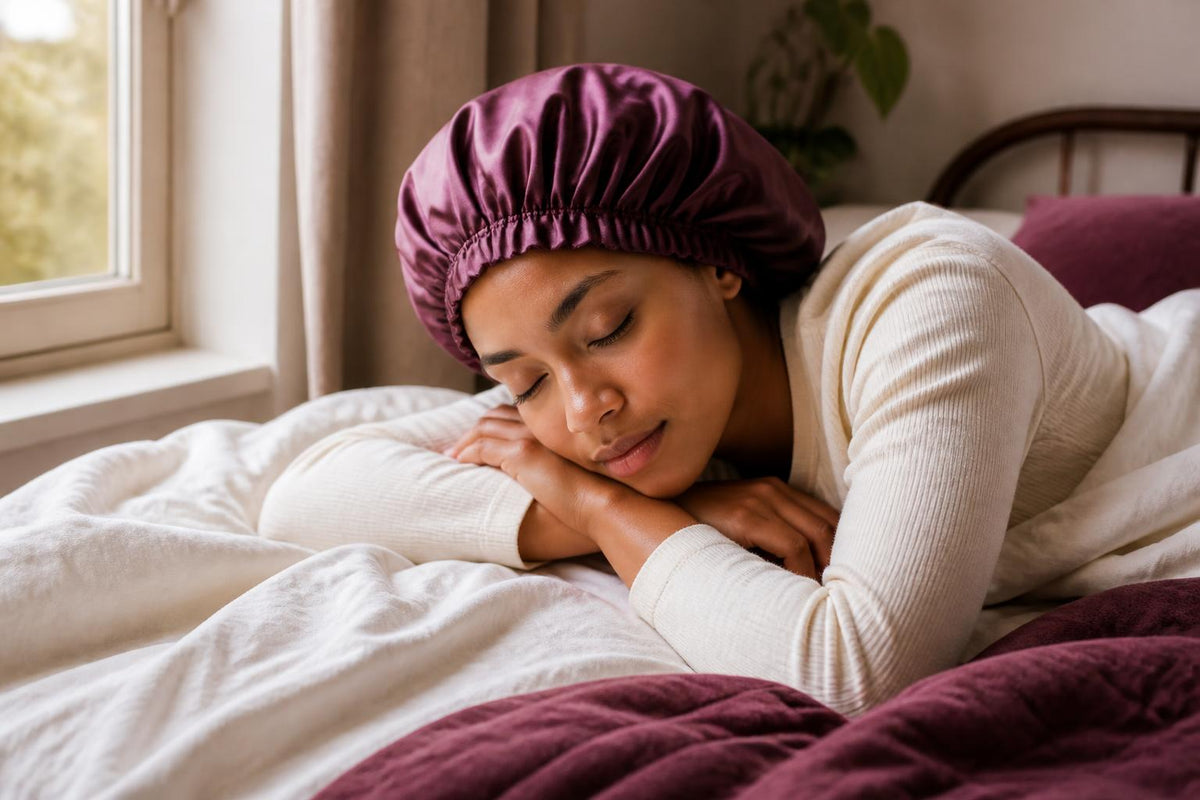
A sleep cap helps hair stay smoother overnight by reducing the rubbing, snagging and moisture loss that happen while you move in your sleep. Instead of hair catching on cotton bedding, rough seams or itself, it stays gathered in a softer, more controlled layer. That usually means less frizz in the morning, fewer tangles, and less disruption to curls, blow dried lengths, braids or wrapped styles.
It is not a miracle fix, and it does not replace a good wash and conditioning routine. What it does very well is protect the work you have already put into your hair. If your hair is prone to dryness, knotting, breakage from friction, or waking up looking larger and rougher than it did at bedtime, a well chosen sleep cap can make a noticeable difference with very little effort.
What a sleep cap actually does overnight
Most overnight hair disruption comes down to friction and movement. As you turn your head on a pillow, loose hair is repeatedly rubbed, compressed and pulled. On some hair types that shows up as frizz. On others it means flattened roots, stretched curls, matted ends or a style that simply loses its shape before morning.
A sleep cap creates a barrier between the hair and the bedding. That barrier helps in four main ways.
First, it cuts down friction. Hair slides more easily against the inside of the cap than it does against a standard cotton pillowcase. That matters most for lengths that tangle easily, curl patterns that separate and roughen overnight, and fragile ends that dry out quickly.
Second, it helps keep hair grouped together. When hair is left loose, individual sections can twist around each other through the night. A cap contains the hair so it is less likely to knot at the nape, around the crown or through the ends. For longer hair, that alone can make morning detangling much quicker.
Third, it helps limit dryness. A sleep cap does not add moisture by itself, but it can help your hair hold on to the conditioning products you applied before bed. If you use a light leave-in, a cream or a small amount of conditioning oil on the ends, less of that product is rubbed off onto bedding.
Fourth, it helps preserve shape. Curls can stay more defined, stretched styles can stay neater, and blow dried hair can stay smoother when it is protected from constant overnight disturbance. It will not keep every style exactly as it was, especially in humid weather or after a long day, but it can reduce the amount of restyling needed in the morning.
This is why we often think of a sleep cap as part of hair care, not just an accessory. It protects the hair while you are not actively managing it, which is often when avoidable wear happens.
Who benefits most from wearing one
Not everyone needs the same overnight routine, but some hair types and styles usually benefit more than others.
Curly, coily and tightly textured hair often sees the biggest improvement. These textures can lose definition and pick up surface frizz quickly when left loose against bedding. They can also be more prone to dryness, so reducing friction and helping products stay on the hair rather than on the pillow is useful. If you regularly refresh curls in the morning, a cap can help you do less of that.
Long hair is another obvious candidate. The longer the hair, the more chance there is for it to wrap around itself, catch under shoulders, or knot through the ends. If you often wake up with tangles at the back or underneath, overnight protection is worth trying. We cover that in more detail in our guide to protecting long hair overnight without the fuss.
Dry, bleached, colour treated or heat styled hair can also benefit because these lengths are often more vulnerable to roughness and breakage from repeated rubbing. A cap will not reverse damage, but it can help you avoid adding to it night after night.
Protective styles are another good fit. Braids, twists, rod sets, wrapped styles and many stretched looks tend to last better when they are covered. The cap helps reduce fuzziness around the surface and keeps sections from separating too much while you sleep.
Short hair can benefit too, but it depends on the style. A cropped cut that is easy to reshape in the morning may not need one. A short curly style, finger waves, a laid finish or a set style often does. The same goes for fringes. Some people prefer to leave a fringe out of the cap if they do not want it flattened.
Fine, straight hair is where the answer is more mixed. Some people with fine hair love the smoother finish and fewer tangles. Others find that a cap makes the roots too flat or warm. In that case, the shape and fit matter a lot, and a looser option can work better than a very snug one.
The key point is that a sleep cap is most useful when your hair is being negatively affected by overnight friction, tangling or style disruption. If that sounds familiar, it is worth building one into your routine.
How to choose the right sleep cap for your hair
The best sleep cap is the one that suits both your hair and the way you actually sleep. Size, fit, fabric feel, breathability and shape all matter.
Start with size. If you have long, thick, curly or protective styled hair, you need enough room to hold it without crushing it. A cap that is too small forces the hair into a tight bundle, which can flatten curls, bend blow dried lengths and feel uncomfortable through the night. If your hair is shorter or finer, too much extra space can allow it to shift around more than you want.
Next, consider the fit around the hairline. The band should be secure enough that the cap stays on, but not so tight that it leaves marks or creates pressure. If you wake with an indentation across your forehead or tenderness around the edges, the fit is too firm for regular use. This matters particularly if you are trying to protect delicate hairlines.
Fabric feel is also important. The inside should feel smooth against the hair. If the material catches at the cuticle or feels dry and rough in the hand, it is unlikely to help hair stay sleek overnight. Breathability matters as well, especially if you tend to sleep warm. A cap can be soft and protective without feeling stuffy.
Shape makes a practical difference. A bonnet style with more depth can suit curls, braids and long hair because it gives the lengths somewhere to sit without compression. A more fitted shape may suit shorter styles or people who dislike excess fabric moving around at night. If you move a lot in your sleep, a design that sits securely without needing to be tight is usually the most comfortable option.
It is also worth thinking about what you pair it with. If you usually sleep with a loose plait, twists or a pineapple, make sure the cap shape can accommodate that. If you prefer your hair completely loose inside the cap, choose enough room for that to happen without bunching.
Our overnight care collection is where we keep the practical pieces for this part of a routine, including sleep caps and buffs. If you are deciding between options, think less about a one size fits all promise and more about your own texture, density, style and sleeping habits.
How to wear a sleep cap without flattening or pulling hair
The way you put your hair into a cap matters as much as the cap itself. The aim is to contain the hair gently, not to force it down.
Start with dry or almost dry hair. Going to bed with very wet hair trapped under a cap is rarely comfortable, and it can leave the roots flattened while the mid lengths stay damp for too long. If you wash in the evening, use a microfibre towel or cloth to remove excess water first and let the hair dry further before covering it.
Next, detangle gently. Use fingers, a wide tooth comb or a suitable brush depending on your hair type and styling plan. We keep a useful range of brushes and combs for detangling and smoothing, because the right tool makes overnight preparation easier and less rough on the hair.
If your hair needs product, keep it light. A small amount of leave-in on dry ends, a little cream through curls, or a few drops of oil on the oldest parts of the hair is usually enough. Too much product can leave the hair limp, sticky or over-soft by morning. If you use styling gels and creams, let them settle before putting the cap on so you are not trapping a wet cast against the scalp.
Then choose a placement method.
For curls and coils, many people prefer a loose pineapple or very high gathering of the hair before the cap goes on. Use a soft scrunchie or hair band without pulling tightly. This helps preserve volume and stops the curl pattern being compressed at the sides. If you want more detail on that approach, our guide to protecting curls overnight without flattening them walks through the basics.
For long straight or wavy hair, a loose low plait or a very soft twist can prevent tangling without creating a strong bend. If you prefer the hair loose, sweep it upwards into the cap rather than folding it sharply at the neck.
For braids or twists, lay the lengths into the cap in the direction they naturally want to sit. Avoid stuffing them in quickly, because that is when you create pressure points and odd bends.
When putting the cap on, hold the front band open, tilt your head slightly forward, and guide the hair in with your free hand. Once it is on, check around the ears, nape and hairline. Nothing should feel trapped, twisted or tugged. If it does, take a moment to readjust. A cap that is technically on but pulling in one area will not feel wearable for long.
What to pair with a sleep cap in an evening routine
A sleep cap works best as part of a simple, consistent evening routine. That does not need to be elaborate. It just needs to support the condition and style you want to keep overnight.
Start with your wash routine. If your scalp and hair need a full cleanse, use a shampoo that suits your texture and product build up level. If your hair does better with a gentler in between cleanse, a co-wash can be a better fit. The aim is clean roots and conditioned lengths, not stripping the hair before bed.
Follow with conditioner, focusing on the mid lengths and ends. Rinse thoroughly unless the product directions say otherwise. If your hair is especially dry or textured, a leave-in after washing can help keep it softer overnight. We always recommend checking the product directions and the INCI list on the product page, especially if you are comparing formulas for protein, oils, humectants or fragrance.
After washing, dry the hair with a microfibre towel or cloth rather than rubbing it with a standard bath towel. Press and squeeze out excess water. Rubbing roughens the cuticle and can undo some of the smoothness you are trying to preserve.
Then decide whether your hair needs a styler. Curls may benefit from a cream or gel to hold definition. Straight or wavy lengths may need nothing more than a little conditioning oil on the ends. If you are setting the hair in twists, braids or a wrap, use only enough product to support the style without making it tacky.
Gentle tools help here. Sectioning clips, scrunchies and snag free bands can make bedtime styling quicker and neater, especially for longer or denser hair. Our haircare essentials and everyday products and accessories range are set up for practical routines rather than complicated ones.
One point worth making clearly, because readers often ask, is that we do not sell pillowcases or scalp serum in this range. For overnight care on our shop, the relevant options are hair products, drying items, tools, accessories, sleep caps and buffs.
Common problems and easy fixes
If the cap slips off, the fit is usually the issue. It may be too loose, too shallow for your hair volume, or being pushed back by a high pineapple or bulky style underneath. Try a roomier shape if your hair is thick or long, or reduce how much hair is gathered in one place. If you move a lot in your sleep, make sure the band sits evenly rather than riding up at the back.
If it feels too warm, check what is happening underneath the cap. Heavy creams, oils or damp roots can make any overnight covering feel hotter. Use less product, allow more drying time before bed, and choose a cap that feels breathable rather than overly padded. Some people also prefer a buff style for certain seasons.
If it leaves marks on the forehead or around the hairline, the band is too tight or sitting in the wrong place. Shift it slightly back from the most delicate skin, and avoid forcing a smaller cap to work if it is clearly too snug. Regular pressure at the edges is not helpful if you are trying to keep the hairline comfortable.
If your hair is flatter than expected in the morning, look at how you are placing it inside. Hair that is packed downward or folded under itself will lose shape. Lift curls upwards before covering them, keep plaits loose, and avoid tight ties underneath. Sometimes the fix is simply using a deeper cap so the hair is not compressed.
If your style is not lasting, the issue may not be the cap at all. Hair that went in slightly damp, was not set properly, or had too little hold from the start may still need morning refreshing. A cap protects a style, but it cannot fully create one. Better preparation, lighter product layering and gentler placement usually solve more than switching products repeatedly.
If there is still tangling at the nape, try changing the bedtime arrangement. Very long hair often does better in a loose plait or two sections inside the cap rather than completely free. If you use clips, bands or scrunchies overnight, make sure they are soft and not catching on the hair.
A good sleep cap should make overnight hair care easier, not fiddlier. When the size, shape and routine are right, you should wake up with hair that needs less detangling, less smoothing and less rescue work. That is the real benefit. Not perfection by morning, but a simpler, gentler starting point for the day.
Is a sleep cap only for curly or coily hair?
No. Curly, coily and textured hair often benefit most, but straight, wavy, long or easily tangled hair can also benefit from less friction overnight.
Should hair be fully dry before wearing a sleep cap?
Usually, yes. Hair is more vulnerable when damp, so it is generally better to let it dry properly before covering it for the night.
How tight should a sleep cap be?
It should feel secure enough to stay on, but not tight enough to leave deep marks, pull at the hairline or feel uncomfortable around the head.
Can a sleep cap help a style last longer?
It can help preserve neatness by reducing rubbing and frizz overnight, though results depend on the style, hair texture and how the cap fits.
Do you need other products with a sleep cap?
Not always. A sleep cap can be useful on its own, but it often works better with a simple routine such as gentle detangling and suitable conditioning or leave-in care.