
A healthy hair routine that fits real wash days
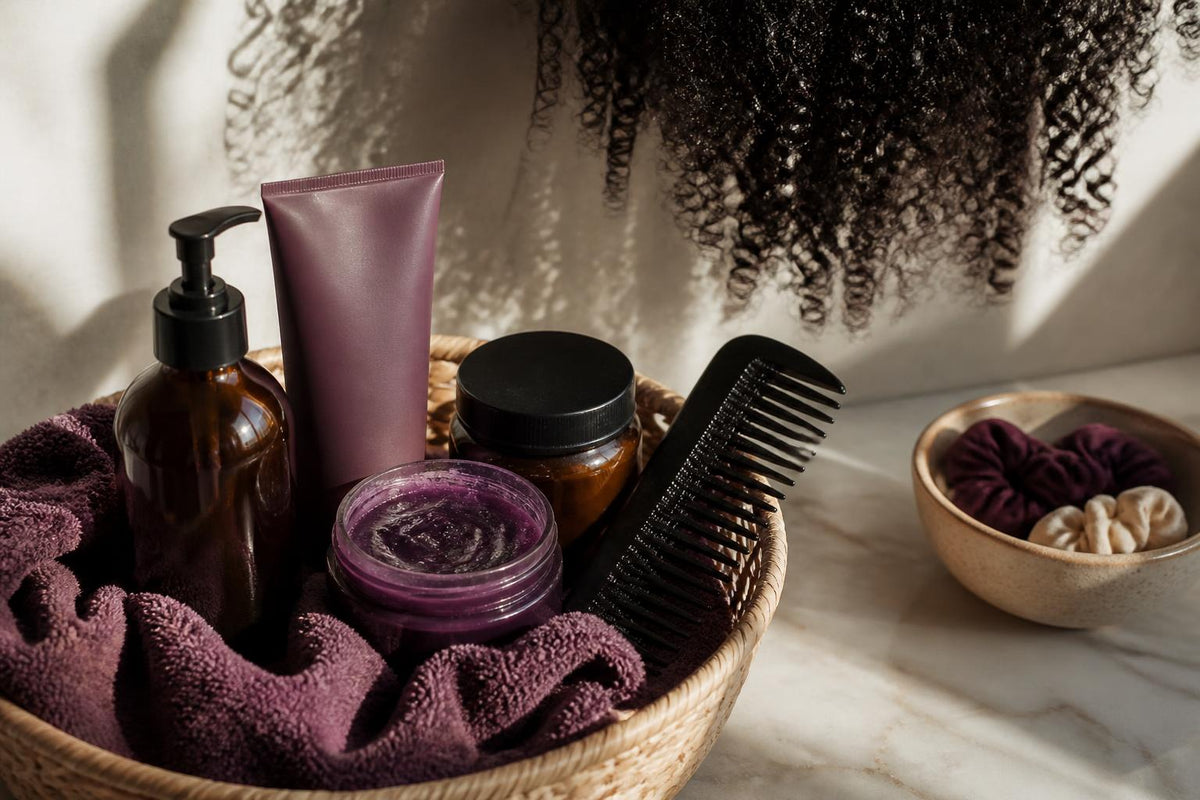
A healthy hair routine should make wash day easier, not turn it into a project. In practice, that means choosing a small number of steps that keep your scalp comfortable, help your hair feel conditioned, and reduce the kind of handling that leads to roughness, tangles and unnecessary breakage. It does not need to be long, expensive or identical to someone else’s routine.
For most people in the UK, the best routine is the one that fits work, weather, exercise, styling habits and hair texture. If your hair is straight and fine, that may mean washing more often with lighter products. If it is curly or coily, it may mean washing less often, conditioning more thoroughly and being more deliberate about drying and overnight care. The aim is not perfection. It is consistency.
What a healthy hair routine actually means
When we talk about a healthy hair routine, we mean a practical set of habits that supports the condition of your hair and scalp in everyday life. That includes how often you cleanse, how you condition, what you use to style, and how you handle your hair between wash days.
A useful routine does four things well.
First, it cleans the scalp often enough to remove sweat, oil, product build-up and general day to day grime.
Second, it keeps the hair lengths conditioned enough that they feel manageable rather than dry, rough or overly coated.
Third, it limits friction. Towels, pillowcases, tight elastics, rough detangling and constant restyling can all wear the hair down over time.
Fourth, it suits your texture and schedule. A wash routine that looks good on paper but takes two hours more than you can spare is unlikely to last.
This is also where product language can get confusing. Haircare labels often highlight ingredients, but what matters first is function. A shampoo cleanses. A conditioner adds slip and softness. A leave-in helps with moisture and manageability after washing. A gel helps hold a style. An oil can help seal in softness or add shine, depending on how much you use and when.
If you like to check ingredient lists, use the INCI list on the pack or product page rather than relying only on front of pack claims. That gives you the clearest picture of what you are using.
How often should you wash your hair?
There is no single correct wash schedule. In the UK, where weather, commuting and indoor heating can all affect how the scalp feels, wash frequency is best judged by a few practical signs.
Start with scalp comfort. If your scalp feels greasy, itchy, sweaty or coated, it is probably time to wash. If it feels comfortable and your roots still look and feel fresh, you may not need to.
Then consider build-up. Styling gels, creams, dry shampoo, conditioning products and oils can all accumulate. Even products that suit your hair can start to feel heavy if they are layered for too long without a proper cleanse.
Exercise matters too. If you work out often, sweat at the scalp may mean you prefer more frequent washing, or at least a rinse and refresh between full wash days.
Hair texture changes the picture. Straight hair often shows oil at the roots sooner because sebum travels more easily down the hair shaft. Wavy hair can sit somewhere in the middle. Curly and coily hair often stays looking fresher at the roots for longer, but the lengths may need more moisture and gentler handling.
Styling needs also matter. If you wear sleek styles, fringes, or a close to scalp finish, you may wash more often for the look you want. If you wear textured styles, twists, braids or wash and go sets, your routine may be built around preserving the style for several days.
As a rough guide, some people wash every two or three days, others weekly, and others somewhere in between. The better question is not, “How many times should everyone wash?” It is, “At what point does my scalp stop feeling clean and my hair stop behaving well?”
If you are unsure, keep it simple for a few weeks. Note when your scalp starts to feel uncomfortable, when your roots look coated, and when your style stops responding well. That gives you a more useful schedule than copying someone else’s.
How to build your wash-day steps
A workable wash day follows a sensible order. Cleanse first, condition second, detangle when the hair has slip, then apply any post wash stylers according to the result you want.
If your hair is tangled before washing, separate it gently with your fingers first. You do not need to force a brush through dry, snagged hair. For textured hair especially, working in sections can make the whole process easier.
Start with cleansing the scalp. Shampoo is mainly for the roots and scalp, not for scrubbing the lengths. Wet the hair thoroughly, apply cleanser to the scalp, and use your fingertips to work it in. If you like, a scalp massager can help distribute product and lift build-up, but keep the pressure light. The goal is to cleanse, not scratch.
Rinse well. If you use a lot of styling product, sweat heavily, or go longer between washes, a second cleanse may help. The first wash loosens build-up, the second gives a cleaner result.
Then move to conditioner through the mid lengths and ends, and up toward the roots only if your hair needs it. Conditioner gives slip, which is why this is usually the best stage for detangling. Use fingers first, then a wide tooth comb or suitable brush if that works for your texture. We keep a range of brushes and combs for detangling and daily use, because the right tool can make a noticeable difference to how much pulling and snapping happens.
A co-wash can be useful for some routines, especially if your hair is curly or coily and you want a gentler refresh between fuller cleanses. A co-wash is a cleansing conditioner. It is not the same as simply using standard conditioner instead of shampoo. It can suit hair that feels dry or is washed more often, but it may not remove heavier build-up as well as shampoo. If you use gels, oils and creams regularly, you will still usually want a proper shampoo wash in the rotation.
Once conditioned and detangled, rinse according to preference. Some people like to rinse thoroughly for a lighter finish. Others leave a slight conditioned feel before applying a leave-in. What matters is how your hair responds.
If you want more guidance by texture rather than by trend, our guide to a practical routine that suits your texture is a useful next read.
What to use after washing
After washing, the simplest way to choose products is by function.
A leave-in is for softness, slip and easier handling after the rinse out stage. It is usually the first product applied to damp hair, especially if your hair tangles easily or tends to feel dry. You do not need a large amount. Too much can leave the hair limp or coated.
A cream usually adds softness, light control and a more cushioned feel. It often suits thicker hair, drier textures, twist outs, braid outs or styles where you want the hair to feel supple rather than crisp.
A gel gives hold. If you want waves or curls to keep their shape, or you want a sleeker finish, gel is often what does the work. Some gels dry with a cast, which can later be softened by gently scrunching or smoothing once the hair is fully dry. If you dislike crunch, use less product or layer it over a light leave-in rather than a heavy cream.
An oil is best treated as a finishing or sealing product, not a cure-all. A few drops through the ends can help reduce a dry feel and add shine. Too much can weigh the hair down or make it feel greasy more quickly. Conditioning oil makes most sense where the lengths need a little extra softness, not where the scalp already feels oily.
A refillable spray bottle can also earn its place in a routine. Dampening the hair lightly on non wash days can help with restyling, refreshing waves or curls, and making detangling less abrasive.
The main point is not to use every category at once. Choose according to what your hair needs that day. If your hair already feels soft and you only need hold, go straight to gel. If it feels dry but you are not setting a style, a leave-in may be enough. If it is fine and easily weighed down, keep application light and focused on the lengths.
Drying, sleeping and everyday handling
A lot of routine problems are not really about products at all. They come from friction, tension and rough handling.
Drying is a good example. Rubbing wet hair hard with a bath towel lifts the cuticle and encourages tangling. Instead, blot or gently squeeze out water. A microfibre towel or soft drying cloth is usually kinder because it reduces friction and absorbs water without as much rough movement. We keep drying towels and overnight hair care essentials for exactly this reason.
How you detangle matters just as much. Wet hair can be more elastic and more vulnerable to stretching if handled roughly. Work in sections if needed, support the section with your hand, and start from the ends before moving upward. If a brush is not right for your texture at that stage, use a wide tooth comb or fingers instead.
Sleeping habits can either preserve a style or undo it overnight. A sleep cap or buff helps reduce friction against bedding and can help keep styles neater for longer. This is especially useful for curls, coils, blow dried hair and protective styles. We do not currently sell pillowcases, so caps and buffs are the main overnight options in our range.
Hair accessories matter too. Tight bands with metal joins, rough grips and poorly placed pins can snag and weaken the hair. Softer scrunchies, smooth bands, and clips or pins used with a bit of care are a better everyday choice. The same goes for constant tension. If you wear your hair tightly pulled back every day, rotating styles and easing the tension can help the hairline and lengths.
Everyday handling should be as light as possible. The more often you brush, restyle, tie up, smooth down and redo sections, the more wear you create. That does not mean doing nothing. It means being deliberate. Handle the hair when there is a reason to, not just out of habit.
How to adjust your routine for straight, wavy, curly and coily hair
The easiest way to make a healthy hair routine work is to adapt the same basic structure to your texture, rather than building a completely different system from scratch.
Straight hair often benefits from more frequent cleansing and lighter conditioning. Oil tends to show sooner, and heavy creams or oils can flatten the hair quickly. A straightforward routine might be shampoo, light conditioner mainly on the ends, then a small amount of leave-in or nothing at all if the hair already feels smooth. Dry shampoo and repeated heat styling can create their own build-up, so regular proper cleansing still matters.
Wavy hair often needs balance. Too little moisture can make it frizzy, but too much weight can pull the wave out. Many people with waves do well with shampoo, conditioner, then a light leave-in or a small amount of gel to hold shape. Drying technique matters here. Scrunching gently and using a microfibre towel or cloth can help keep the pattern. If this sounds familiar, our guide to a wavy routine that keeps shape without crunch goes into more detail.
Curly hair usually benefits from more deliberate conditioning and styling while damp. Shampoo or co-wash choices may alternate depending on build-up, followed by conditioner for slip and detangling, then a leave-in, cream or gel depending on the finish you want. Many curly routines work best when the hair is left relatively undisturbed while drying. If you touch it constantly before it is dry, frizz tends to increase.
Coily hair often responds well to sectioning, thorough conditioning and lower friction handling throughout the week. Wash day may include pre detangling, shampoo, a generous conditioning stage, and a leave-in followed by cream or oil depending on the style. Coily hair can also benefit from stretch styles, twists or braids that reduce daily manipulation. A co-wash can be useful between fuller wash days, but scalp comfort and product build-up should still guide when to shampoo properly.
Across all textures, the same rule applies. Add steps only when they solve a real problem. If your hair is manageable with cleanse, condition and one styler, that is enough. If you need a few more steps because your hair tangles, dries out or loses shape quickly, keep those steps, but make each one earn its place.
That is the real shape of a healthy hair routine. It is not the longest routine, or the one with the most products. It is the one you can repeat, the one that keeps your scalp comfortable, and the one that helps your hair feel easier to live with on real wash days. At ManeDivas, operated by Fleeta Limited, that is the standard we use for every guide we publish.
How long does it take to see whether a hair routine suits you?
Usually a few wash cycles are enough to judge basics such as comfort, manageability, definition and build-up. Give a simple routine a fair try before changing several products at once.
Should everyone use a leave-in product?
No. Many people benefit from a leave-in, but the amount and type depend on texture, dryness and styling goals. Fine hair may need very little, while drier curls may want more support.
Is co-wash enough on its own?
For some routines, yes on certain wash days. But many people still prefer a cleanser at intervals to remove heavier build-up from oils, creams and styling products.
Do oils moisturise hair?
Oils can help soften hair, add slip and reduce the feeling of dryness, but they are not the same as water-based moisture. They usually work best as part of a wider routine.
What is the easiest way to reduce breakage at home?
Detangle gently, avoid rough towel drying, use suitable brushes or combs, choose low-friction accessories and avoid pulling hair too tightly day after day.